





RFID Table Maintenance: Best Practices for Long-Term Performance
| 제목 | RFID Table Maintenance: Best Practices for Long-Term Performance | ||
|---|---|---|---|
| 접수기간 | Understanding RFID Table Hardware Lifecycle RFID-enabled gaming tables represent a significant capital investment, and their long-term performance depends heavily on a structured maintenance program. Unlike traditional gaming tables, which require only routine felt replacement and hardware checks, RFID tables integrate electronic components that are subject to wear, environmental stress, and firmware obsolescence. The typical hardware … RFID Table Maintenance: Best Practices for Long-Term Performance 더보기 |
진행사항 | Casino TableRFID Casino Solution |
Understanding RFID Table Hardware Lifecycle
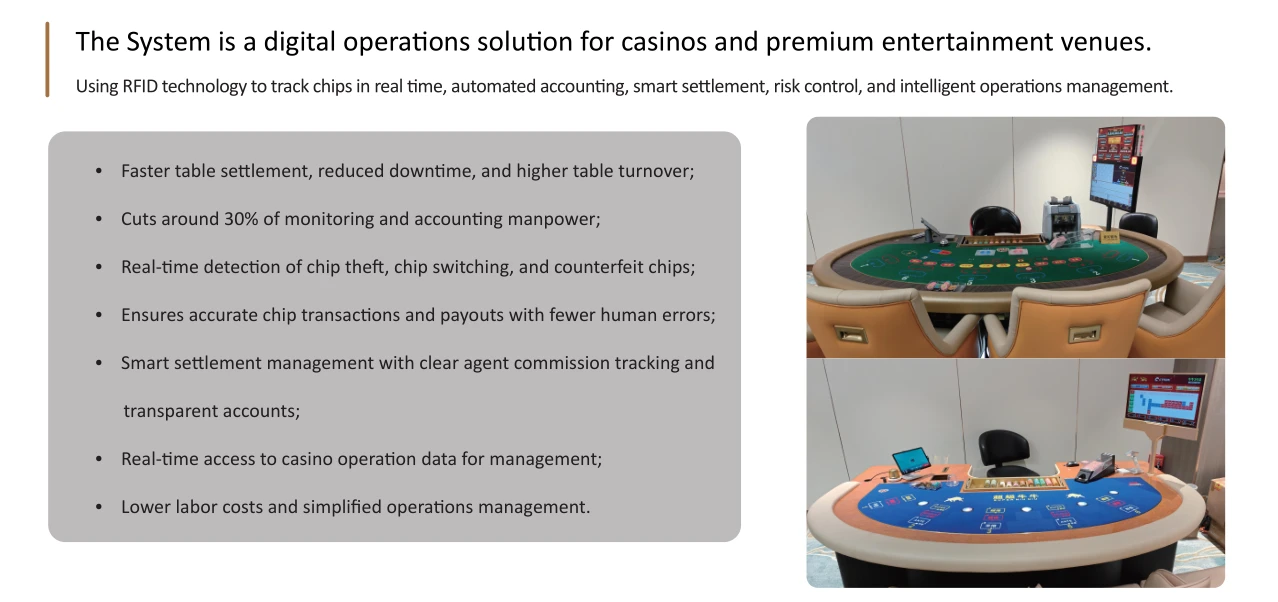
RFID-enabled gaming tables represent a significant capital investment, and their long-term performance depends heavily on a structured maintenance program. Unlike traditional gaming tables, which require only routine felt replacement and hardware checks, RFID tables integrate electronic components that are subject to wear, environmental stress, and firmware obsolescence.
The typical hardware components requiring maintenance include:
– RFID antenna arrays embedded beneath the table surface
– RFID readers and edge processors mounted on or beneath the table
– Cabling and connectors between antennas and readers
– Environmental sensors integrated into the table (temperature, humidity)
– Power supply units and backup systems
– Interface cables connecting to the casino network
Each of these components has a distinct failure profile and maintenance requirement. Understanding these profiles is essential for developing a maintenance program that prevents failures rather than simply reacting to them.
Preventive Maintenance Scheduling
A well-designed preventive maintenance program follows a tiered schedule based on component criticality and failure probability. The three tiers typically include:
Daily Maintenance Tasks
Floor staff should perform daily visual inspections of each RFID table at the start of each shift. This inspection covers visible damage to the table surface that might affect antenna performance, loose cable connections at the table base, and confirmation that the reader status indicator shows normal operation. A daily checklist should take no more than 2 to 3 minutes per table.
The inspection should also include a functional verification of the reader: placing a test chip in a known position and confirming that the system registers it correctly. This 30-second test catches reader failures before they affect game operations.
Weekly Maintenance Tasks
Technical staff should perform weekly maintenance on each RFID table, focusing on the following:
– Cable connection integrity: Inspect all antenna cables, power cables, and network connections for signs of wear, corrosion, or loose fittings
– Reader performance calibration: Run automated calibration routines to verify that the reader sensitivity is within specified parameters
– Surface condition: Inspect the gaming surface for wear patterns that might affect chip movement or RFID read performance
– Environmental monitoring: Check temperature and humidity sensor readings against ambient conditions to verify sensor accuracy
Monthly and Quarterly Maintenance Tasks
Monthly maintenance should include more comprehensive testing, including:
– Full chip inventory scan: Verify that all chips on the table are correctly identified and that no phantom reads (false positives) are occurring
– Antenna pattern testing: Confirm that each antenna zone reads chips consistently within its defined boundaries
– Firmware version verification: Confirm that all readers are running current, supported firmware versions
– Network latency testing: Verify that data transmission from the table to the backend system meets latency requirements
Quarterly maintenance should include a deep inspection of the table’s structural integrity, including the mounting of all electronic components, the condition of under-table cable management, and a review of system logs to identify any recurring error patterns.
Antenna Performance Degradation
Antenna arrays are the most vulnerable component in an RFID table system. They are subject to mechanical stress from chip movement, temperature fluctuations, and humidity exposure. Over time, antenna performance degrades in predictable ways:

– **Read range reduction**: Antennas gradually lose sensitivity, resulting in missed chip reads at the edges of their detection zones
– **Intermittent connectivity**: Individual antenna elements may develop intermittent faults that cause sporadic read failures
– **Cross-talk between zones**: Degraded antennas may bleed detection signals into adjacent zones, causing positional ambiguity
Preventive maintenance should include periodic antenna performance testing using calibrated test chips placed at known positions across the table. Most RFID systems include built-in diagnostic tools for this purpose. Any antenna that shows a read rate below 99.5% should be investigated and replaced if calibration does not restore performance.
The typical lifespan of a table antenna array is 5 to 7 years under normal casino operating conditions. Antennas in high-traffic VIP rooms may show accelerated degradation due to the volume of chip movement and the higher frequency of table resets. Operators should budget for antenna replacement as part of their long-term capital planning RFID Gaming Table.
Reader and Edge Processor Maintenance
RFID readers and edge processors are more robust than antenna arrays, but they require regular attention to ensure continued performance. Key maintenance tasks include:
– **Firmware management**: Keep reader firmware current with vendor releases. Firmware updates address both performance improvements and security vulnerabilities. Establish a testing protocol before deploying firmware updates to production tables
– **Thermal management**: Verify that cooling fans and heat sinks are functioning correctly. Readers in enclosed table bases can overheat if ventilation is blocked or fans fail
– **Storage and log management**: Edge processors accumulate operational logs and temporary data. Establish a log rotation and archival policy to prevent storage overflow
– **Power supply monitoring**: Check power supply voltage outputs quarterly. Unstable power can cause intermittent reader failures that are difficult to diagnose
The mean time between failures for a well-maintained RFID reader is typically 5 to 8 years. Most reader failures are preceded by warning signs—increased error rates, thermal anomalies, or intermittent connectivity—that a proactive maintenance program will catch before they cause table downtime.
Environmental Considerations for RFID Performance
RFID read performance is sensitive to environmental conditions, particularly the presence of liquids and metal objects near the antenna field. Casino environments present specific challenges:
– **Liquid spills**: Beverages are common on the casino floor. While modern RFID systems include algorithms to filter out liquid-induced read anomalies, excessive moisture under the table felt can degrade antenna performance over time
– **Metallic content**: Some casino furniture and gaming equipment contain metal that can attenuate the RFID signal. The table layout and placement should account for metallic elements in the surrounding environment
– **Temperature extremes**: Table game areas can experience temperature fluctuations between air-conditioned floor sections and warmer areas near entrances or kitchens. RFID readers are rated for specific temperature ranges, and ambient temperatures outside these ranges can affect performance and longevity
Operators should install environmental sensors on each table and integrate readings into the monitoring dashboard. When temperature or humidity readings drift outside normal parameters, the system should generate a maintenance alert.
Table Felt and Surface Management
The gaming surface itself is a maintenance consideration that affects RFID performance. Felt wear creates uneven chip movement, which can affect the accuracy of chip position tracking. Excessive felt wear in specific areas—such as betting circles or chip tray positions—should trigger resurfacing before it affects read accuracy.
When replacing felt on an RFID table, operators must take care not to damage the underlying antenna array. The antenna elements are typically embedded in a protective layer beneath the felt, but physical penetration during the resurfacing process can cause damage. The table should be taken out of service during felt replacement, and the antenna system should be tested after the new felt is installed.
Felt replacement cycles for RFID tables should be aligned with the table’s RFID maintenance schedule. In high-traffic areas, this might mean replacing felt every 12 to 18 months. In moderate-traffic areas, a 24 to 36-month replacement cycle is typical.
Spare Parts Management and Vendor Support
Effective maintenance requires a well-stocked spare parts inventory. Critical spares that should be kept on hand include:
– Antenna modules (at least 10% of installed count as spare)
– RFID reader units (at least one spare per 10 installed units)
– Power supply units
– Network interface modules
– Cable assemblies and connectors
– Test chip sets for calibration verification
Establishing a service level agreement with the RFID vendor is essential. The agreement should specify response times for hardware failures, availability of on-site support, and terms for spare parts provisioning Macaumr Casino Equipment. A typical SLA for casino RFID systems specifies:
– Critical failure response: 2 to 4 hours (reader failure causing table shutdown)
– Non-critical failure response: 24 to 48 hours (antenna degradation affecting accuracy but not preventing operation)
– Scheduled maintenance support: On-site technical assistance quarterly or as needed
Total Cost of Ownership Considerations
A comprehensive maintenance program adds 3% to 5% of the initial capital investment to the annual cost of ownership. This figure covers spare parts, service contracts, and internal maintenance labor. Against this cost, operators should weigh the cost of unscheduled downtime:
– Each hour of table downtime during peak operating periods represents lost revenue from game revenue, reduced table utilization, and potential player dissatisfaction
– Emergency hardware replacement typically costs 30% to 50% more than planned replacement due to expedited shipping and emergency service fees
– Frequent failures damage staff confidence in the system and can lead to workarounds that compromise data quality
The return on a well-structured maintenance program is measured in uptime reliability. Operators who implement comprehensive preventive maintenance programs consistently achieve 99.5% or higher uptime for their RFID table infrastructure, compared to 96% to 98% for facilities that rely primarily on reactive maintenance.
Frequently Asked Questions
How often should RFID table hardware be replaced?
The typical replacement cycle for major RFID components is 5 to 7 years for antenna arrays, 7 to 10 years for readers and edge processors, and 3 to 5 years for power supply units. However, replacement decisions should be driven by performance monitoring data rather than fixed schedules. When read accuracy falls below 99% despite maintenance intervention, or when firmware updates are no longer available for a reader model, replacement should be scheduled.
What is the most common cause of RFID table failures?
Connector failure is the single most common cause of RFID table failures. Cable connectors between antennas and readers are subject to repeated thermal cycling and physical movement, which causes gradual degradation. Regular inspection and tightening of connectors during preventive maintenance catches most connector issues before they cause table failures. Operators who neglect connector inspection typically see a 20% to 30% higher rate of table downtime.
Can RFID table maintenance be performed without taking tables out of service?
Some maintenance tasks—visual inspection, functional testing with test chips, log review—can be performed without taking the table out of service. However, any task that involves cable disconnection, antenna replacement, or firmware updates requires the table to be removed from active play. These tasks should be scheduled during low-traffic periods or planned room closures to minimize revenue impact.
How do maintenance requirements differ between baccarat and blackjack RFID tables?
Baccarat tables typically have higher chip movement volumes than blackjack tables due to the speed of play and the number of chips involved in each hand. This higher activity level accelerates wear on antenna arrays and connectors. Baccarat tables should be inspected and maintained more frequently—weekly rather than bi-weekly—particularly for antenna performance testing. Blackjack tables, while requiring less frequent inspection, often have more complex antenna configurations to track multiple player positions simultaneously, which requires more detailed calibration during maintenance.
What documentation should maintenance staff maintain for RFID tables?
Maintenance staff should maintain the following records for each RFID table: installation date and configuration, firmware and software versions, all maintenance activities with dates and technician names, performance test results over time, any hardware replacements with part numbers and reasons, and environmental conditions observed during maintenance visits. This documentation supports trend analysis, warranty claims, and vendor support requests. Digital maintenance management systems integrated with the RFID monitoring platform provide the most efficient approach to maintaining these records.